
Why You Should Always Be Prepared For An Equine Emergency-A Cautionary Tale
Staying prepared can be the difference between life and death in the event of an equine emergency. Read about Al, a lucky horse whose owner was prepared.

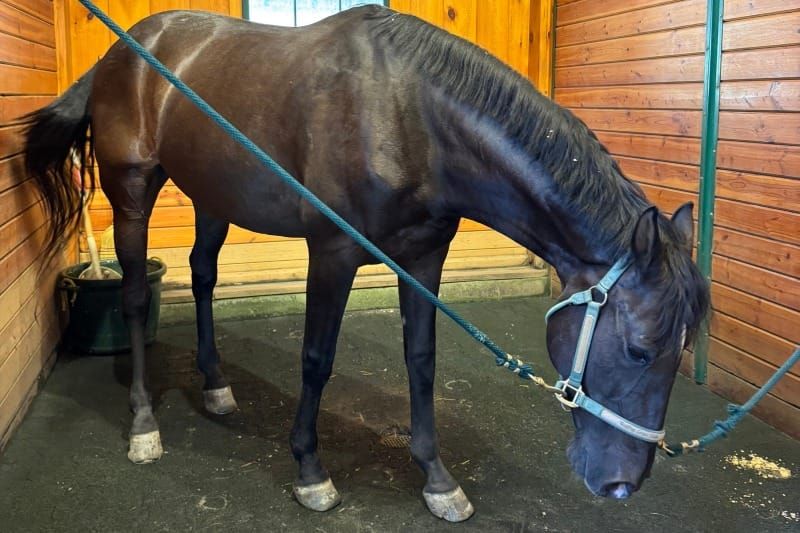
I’ve always fancied myself as someone who’s prepared for most anything. I have a large fully stocked medicine box. Seriously, it’s large. It even has wheels. I keep multiple thermometers in the barn. I have my own truck and trailer. I’ve always kept up with maintenance for both… That is until this last year. And that’s where things went horribly, horribly wrong.
Last Tuesday was a pretty nice day. It wasn’t too cold, the sun was in and out, and there wasn’t much wind. A great day to spend with horses! Around noon I was finishing up chores. I was just filling up a bucket to soak Shiny’s hay, and happened to notice Al get up from rolling out in the ring. Nothing out of the ordinary, it’s a nice place to roll. I then brought Eros in from his paddock. Usually by the time I’m done with that, Al is waiting for me at the gate. (He knows the routine well.) But he wasn’t today. He was still standing over where had rolled. He looked a little off, but followed me in when I clipped the lead to his halter. He stood nicely to have his boots and turnout sheet removed. I put him in his stall and expected him to pee since that’s what normally happens. But it didn’t. Instead he was looking to roll again. Uh-oh. I convinced him not to do that, and ran out to get my pony in as quickly as possible.
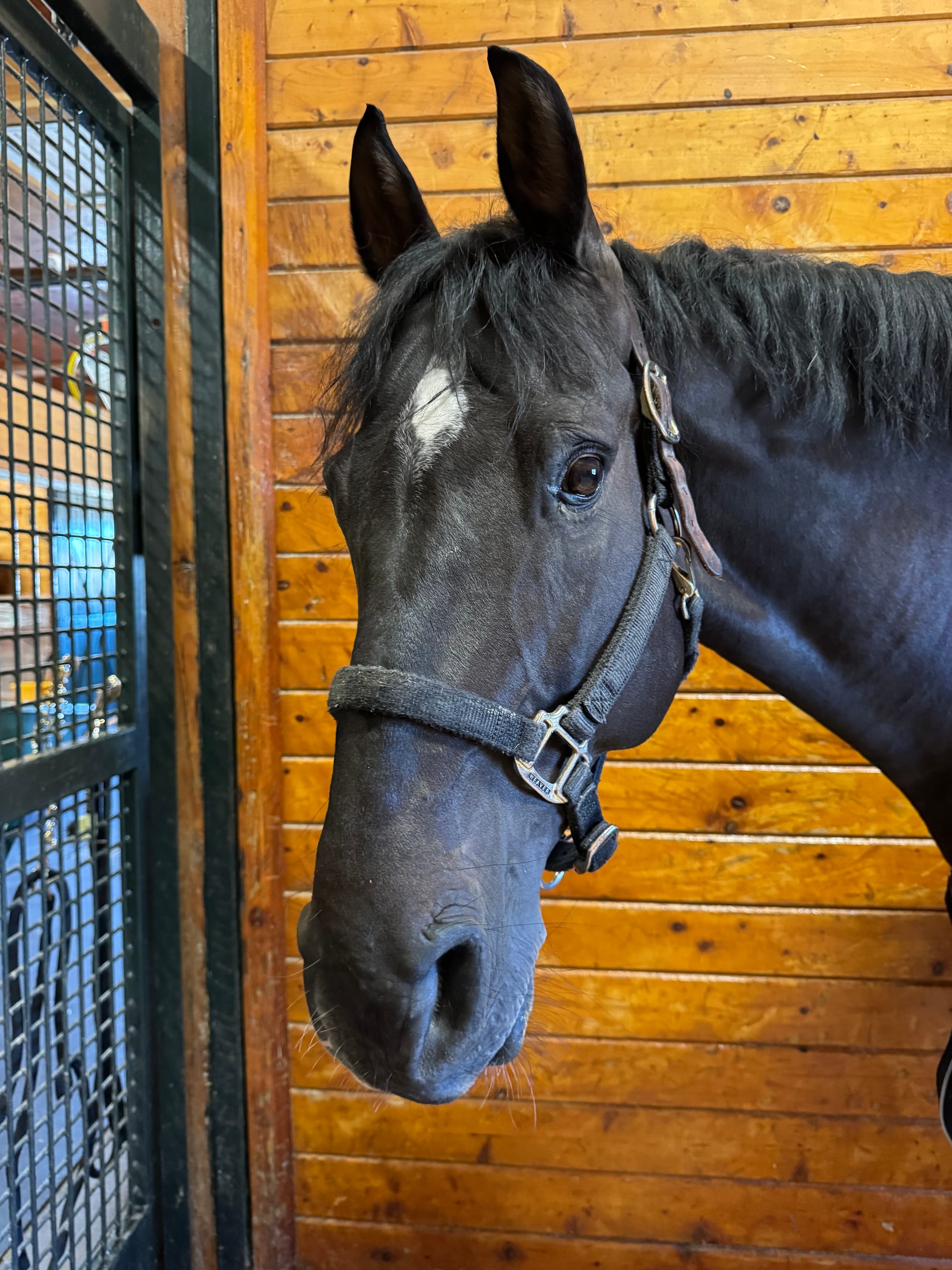
Al was looking to go down again, so once the pony was tucked in her stall, I took him out to handwalk while I called the vet. I assumed initially this was colic, but he passed manure in his stall while I was out getting the pony. He then passed more while we were walking, three piles worth. My vet suspected maybe choke, but I didn’t really think so. Al wasn’t coughing at all, and while his breathing was harder than normal, I would not have called it labored. Per vet’s orders I administered Banamine, and was told to walk him until it kicked in. About the time it started to take effect, I noticed some brown fluid coming from his nose. It would come in little spurts. I sent a video of it to Doc, who upon seeing that said he would be there right away. Never a great sign!
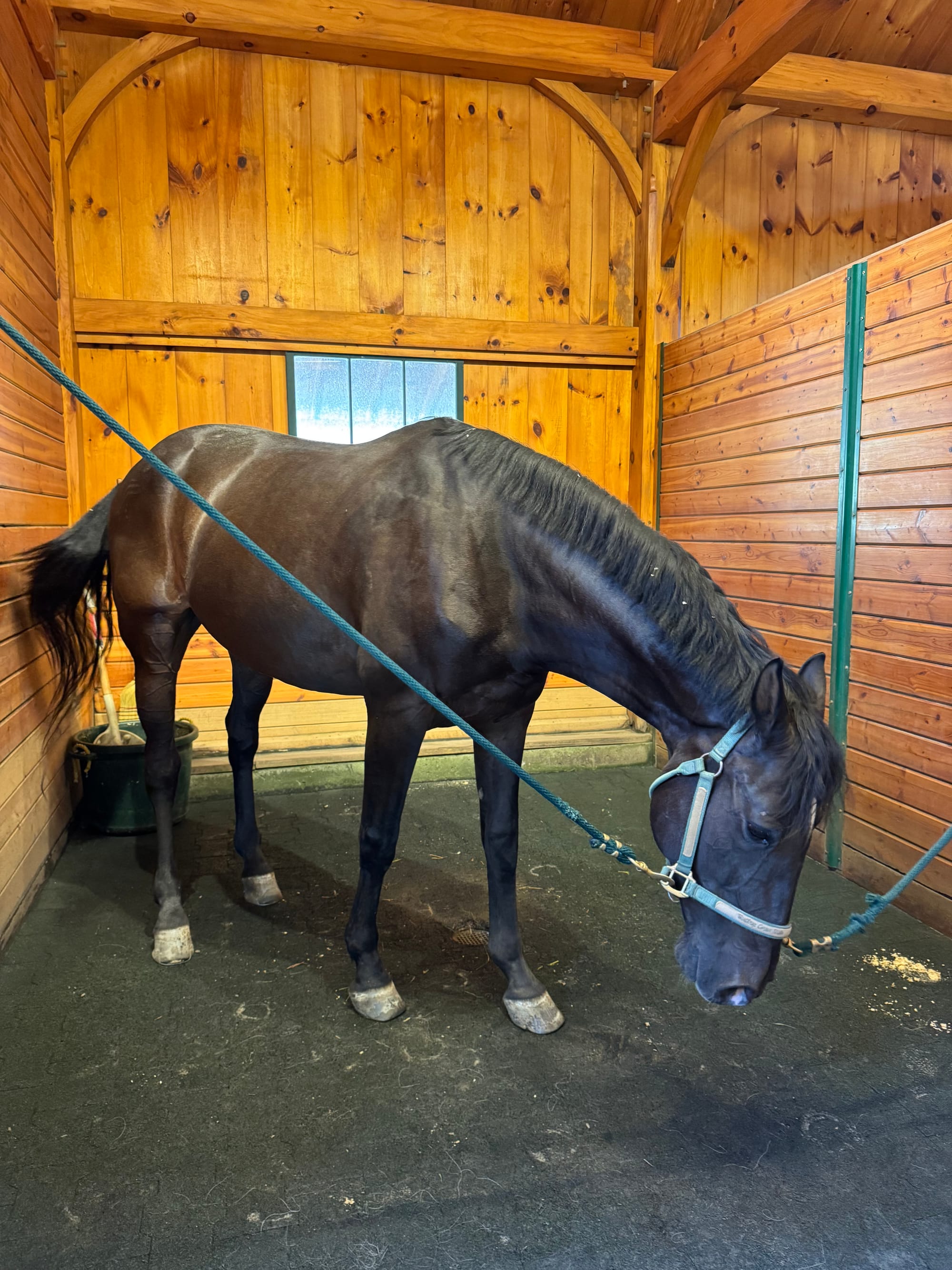
When Doc arrived he took Al’s vitals. Still no fever (I had checked that when this all started), heart rate slightly elevated, but not alarming. Al was clearly still very uncomfortable though. We brought him back inside where he was sedated and tubed right away. About two gallons of reflux came out through the tube, meaning that if the vet hadn’t come when he did, Al’s stomach could have ruptured. At this point Doc said Al needed to get to a hospital and asked if surgery was an option for him. I said it was, and Doc got on the phone to see which hospital could take him. We are very lucky to be within an hour and a half of a few well respected large animal hospitals.
While Doc was arranging that, I had a wee panic because my truck needs to go into the shop, and my trailer hasn’t been serviced in much too long. So rather than add more angst to an already stressful event, I reached out to a local trainer who is just 5 miles from me and asked her if there was any chance she could give us a ride. She’s one of the kindest people I know and without any hesitation she said, “yes, absolutely when do you need us to come? Now?” And I said yes, now. Her husband arrived in mere minutes. Doc helped us get Al loaded (tube still in his nose and all). I sent them ahead while I very quickly prepped dinner for the other two horses, let my dog out, and arranged for a friend to come feed the other two horses that evening. I arrived just a few minutes after Al at the clinic.
The initial work up suggested we could wait another hour before sending him in for surgery. Unfortunately, tests performed at that one hour mark told us it was time. I was sent home as they took Al back for the procedure. It was 8pm and they said it would be a minimum of four
hours before they had news for me. So home I went to finish cleaning up the barn. I had left a mess when we had to go in a hurry. I got a call at the three hour mark which made me nervous, because hearing earlier than expected probably wasn’t positive. But it actually WAS great news. The surgery went very well, and Al had minimal damage from this episode. He had a blockage in the small intestine very close to where the stomach connects. I was told it’s a very uncommon colic. Which, if you know Al, that’s about what I would expect from him. Anyway, it was a food bolus that was just too big to move down the colon on its own, and it wasn’t letting anything else leave the stomach either. They were able to break it apart a little just by massaging it, and then worked it out to the large intestine where he would eventually pass it on his own. No resection necessary, and otherwise everything else looked pretty pristine, which is great news.
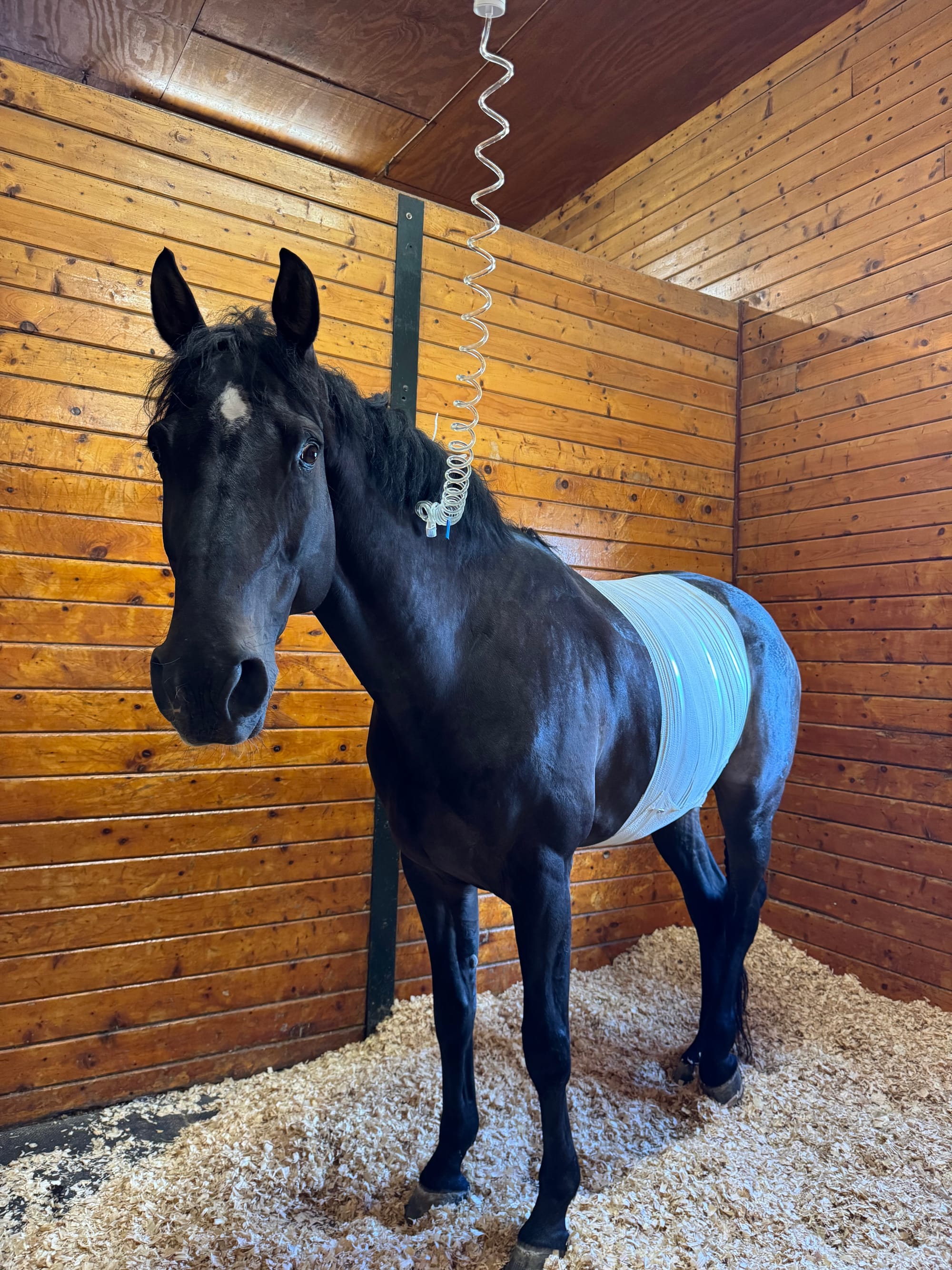
It’s been a week, and Al is home now. Thank goodness. He’ll be on vacation for a few months, but should be good as new when we get past all that. I am very thankful that this all worked out: that Doc arrived when he did, that we could get into the closest hospital right away, and that I could find a ride on the first try. I have learned a very valuable lesson from this. I will never let my truck and trailer lapse on maintenance again. I will be scheduling both for service on Monday when I have time to sit down and do that. I also plan to go through the med box and make sure my meds aren’t expired (thankfully this time they were all still good) and that my thermometers all work. That wasn’t an issue for me when this happened, but five of the six I had aren’t working anymore. I bought a few replacements already.
I don’t even want to think what could have happened if I had risked taking my rig and something had gone wrong on the way. The vet clinic is an hour and half from my farm, so imagine if we only made it halfway? Let’s not even go there! So let my irresponsibility be a lesson for you too, and make sure to keep up with all the things to ensure you’re prepared for an equine emergency. But also, if you somehow aren’t, make sure you do something nice for the people who drop everything to help you. Having horses takes a village, and it’s so important to have the right villagers around you!
Have you experienced an emergency like this with your horse? Head over to TurnoutHQ to share your story!
Sources
Stacie Seidman