
Tackling Mud at the Barn
Mud is more than just messy. It can create unsafe footing, damage pastures, and lead to hoof and skin problems for horses. With smart planning, drainage solutions, and better footing in high traffic areas, barns can reduce mud and create safer, healthier spaces for horses and riders.

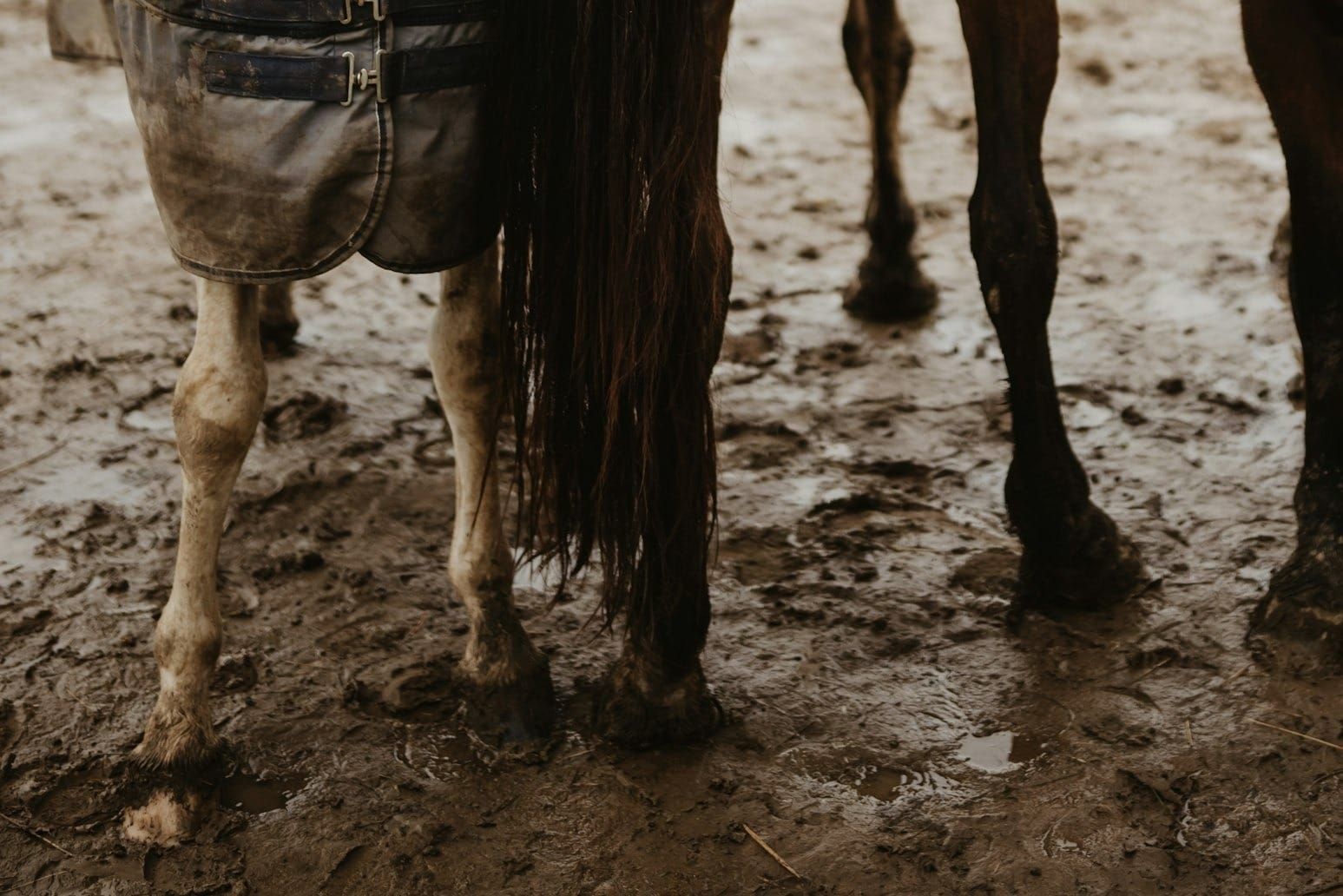
Mud might seem like a seasonal inconvenience, but for horse owners and barn managers it’s often one of the biggest ongoing challenges. Beyond being messy and unattractive, mud poses real risks: it creates unstable, slippery footing that can lead to injuries, encourages hoof and skin problems like thrush and mud fever, accelerates pasture degradation, and makes everyday barn chores harder.
Fortunately, managing mud is not a hopeless battle. With good planning, smart infrastructure upgrades, and routine maintenance, you can significantly reduce muddy conditions and improve footing around your barn and turnout areas. Here’s how.
Why Mud Happens
Before we dive into solutions, it helps to understand why mud becomes such a stubborn problem on horse properties.
At its core, mud is just wet soil and organic material that loses its structure when saturated with water. Some soils, particularly clay, hold moisture long after rains have stopped, while sandy soils drain more readily. Low-lying spots in fields and paddocks tend to collect surface water. Places with a lot of hoof traffic, like barn entrances, waterers, and gates, quickly become churned up and compacted.
Aside from the visual mess, muddy conditions:
- Increase the risk of slips and falls, especially for young, active, or older horses.
- Promote hoof issues like thrush and white line disease when standing in wet, dirty ground for long periods.
- Lead to skin irritations such as mud fever (pastern dermatitis) from prolonged exposure to wet, impure soil.
- Can damage pastures, breaking down grasses and increasing erosion.
Managing mud is about safety, horse health, and protecting your investment in your facilities.
Plan First: Understanding Your Property’s Challenges
The most effective mud management strategies start with understanding what you’re working with:
Assess water flow and soil type:Identify where water naturally flows into paddocks, sacrifice areas, and high traffic zones. If runoff from roofs or high ground funnels directly into areas where horses congregate, that’s a recipe for mud. Take note of soil type too: heavy clay will hold water much longer than sandy loam. You can send a soil sample in for testing through your local CES so you know what to expect for drainage, as well as the best way to fertilize and seed for grass paddocks.
Map trouble spots:Make a list of areas that routinely turn into mud; barn doors, gate entrances, around waterers and feeding stations, turn-outs, and paddock edges. These will be your primary focus areas for improvement.
Minimize Mud at the Source
Control Water Entry
Managing how water enters your horse areas is one of the most effective ways to reduce mud. Since soil and manure need water to turn into mud, controlling roof runoff is critical.
- Install gutters and downspouts on all barn and shelter roofs.
- Ensure downspouts direct water away from paddocks, ideally toward a drainage swale, rain garden, or other area where water can disperse without contact with horses or paddocks.
- Consider rain barrels or other water collection systems to capture clean roof water for later use.
Proper Drainage Solutions
Runoff and standing water are major contributors to mud. There are several ways to manage water before it becomes a problem:
- Berms and swales: These earthworks help redirect water around paddocks and sacrifice areas.
- French drains: Trenches filled with gravel and perforated pipe intercept surface water and carry it away from vulnerable zones. They’re a more involved solution but highly effective in low-lying, wet areas.
- Drain tile: Underground pipes that manage excess water and can be used in paddocks/pastures.
Improve High-Traffic Areas
Even with good drainage, some areas will naturally attract traffic and are therefore more likely to get muddy. These include:
- Barn doorways and alleys
- Feed and water stations
- Gate entrances
- Around shelters and run-ins
For these spots, consider adding structural footing improvements.
Create High Traffic Pads
A high traffic pad is a prepared area designed to support footing materials and allow good drainage. Best practice includes:
- Geotextile fabric to prevent base materials from sinking into the soil
- A layer of gravel or crushed stone to form a stable, draining base
- Optional top dressing with sand, stonedust, wood chips or similar material depending on horse usage
This kind of pad allows water to drain through while keeping the surface firm, minimizing the churn that leads to mud. Consult with a contractor that specializes in site work and/or equestrian arenas to get ideas. Contact your local quarry to find out what materials are available in your area, as it is not the same throughout different parts of the country.
Footing Materials
The right footing can make a dramatic difference in muddy spots:
- Gravel: Excellent drainage and firm footing, but choose sizes horses are comfortable standing on (roughly 3/8″ to 5/8″).
- Sand: Good cushioning and drainage, but avoid feeding over sand as ingestion can risk sand colic.
- Stonedust: Also known as rock dust or quarry dust, it is a byproduct of crushed stone. It is good for keeping areas dry, but can be abrasive on horses’ feet and is very hard when dry.
- Wood chips & organic material: Stable underfoot but decompose over time and require regular top-up.
- Grid systems and mats: Geogrids or heavy rubber mats stabilize footing and distribute weight, reducing mud development.
In high-traffic barn entranceways and gateways, even just stall mats laid over a stone base can greatly reduce mud. Rubber mats however are very slick when they are wet, so choose carefully and be sure to get mats with grooves, ridges or pebbles for traction.
Pasture & Paddock Management
Rotation and Sacrifice Areas
One of the best long-term strategies is preventing overuse of pastures, which leads to bare soil and mud.
- Use rotational grazing so pastures have time to rest and regrow.
- If you only have one large pasture, you can still use rotational grazing by sectioning off smaller areas inside the one large pasture. Electric fence works well for this.
- In wetter months or during dormancy, consider using a sacrifice area — a section of ground designed to take horses while sparing pasture grasses. A dry lot is best for this and is created similar to how a riding area is done, with a well draining base and a top layer of personal preference.
Manure Management Matters
Keeping paddocks and sacrifice areas clean by removing manure frequently reduces organic buildup that mixed with water becomes sticky, slippery mud. Regular manure removal also helps limit bacteria and fly populations.
Quick Fixes vs. Long-Term Solutions
When wet seasons hit hard and mud is already a problem, short-term fixes like adding gravel or sand can help temporarily. These fixes are best when combined with longer-term infrastructure like proper drainage and stable high-traffic pads.
Temporary materials like straw, hay, or wood chips might seem helpful, but they often break down quickly in wet conditions and can make cleanup harder. Instead, invest in solutions that enhance soil structure and drainage.
Final Thoughts
Mud is not fun to deal with, but it is manageable. By understanding how water interacts with your land, redirecting runoff, improving drainage, reinforcing high-traffic areas, and managing grazing carefully, you can make your barn safer, more functional, and far less messy. Every bit of effort you put into mud management pays off in happier, healthier horses.
What are your tips on managing the mud at your barn? Let us know on our THQ community groups!
Sources
https://www.horsejournals.com/acreages-stables/arena-footing/controlling-mud-your-horse-property
https://stablemanagement.com/articles/tips-on-managing-mud-on-horse-farms/?utm_source=chatgpt.com