
Preparing for Summer Heat
Hot weather can be hard on horses, especially when heat and humidity rise together. From dehydration and heat stress to adjusting turnout and riding schedules, proper summer management helps keep horses safe, comfortable, and performing their best through the hottest days of the season.

When summer hits full stride, horse care becomes less about routine and more about awareness. Heat doesn’t just make horses uncomfortable, it can quickly escalate into dehydration, heat stress, or even life-threatening conditions if not managed properly. For horse owners, riders, and barn managers, understanding how to adjust care during hot weather is essential to keeping horses healthy, performing well, and feeling their best.
Here’s a practical, horse-first guide to caring for your horse in hot weather, built on veterinary insight, but grounded in real-life barn management.
Understanding Why Heat Is So Hard on Horses
Horses are powerful athletes, but they’re also surprisingly vulnerable to heat. Their primary cooling system is sweating, which works by evaporating moisture off the skin to lower body temperature. However, when humidity rises or airflow is limited, that system becomes far less effective.
On top of that, horses generate internal heat through both digestion and exercise. In hot conditions, their bodies can struggle to balance heat production with heat loss, putting them at risk for heat stress or heat stroke.
This is why hot, humid days, not just high temperatures, are often the most dangerous.
Hydration: The Foundation of Everything
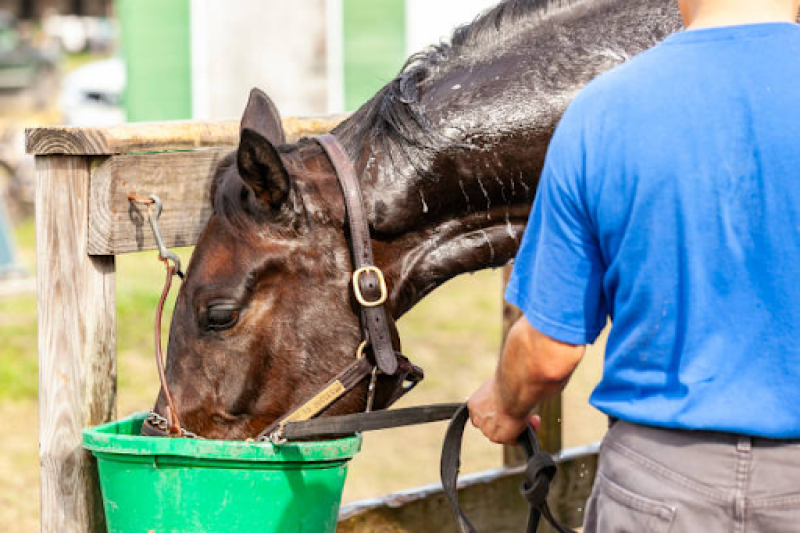
If there’s one non-negotiable in hot weather care, it’s water. Water is the most important part of your horse’s diet! Horses can drink anywhere from 8–12 gallons per day under normal conditions, and significantly more during heat waves or periods of exercise.
In peak summer conditions, some horses may consume up to 13-19 gallons daily.
But access alone isn’t enough, you need to actively monitor intake.
A horse that isn’t drinking adequately is already on a risky path. Dehydration can affect digestion, performance, and overall health, and can quickly escalate into more serious issues like colic or heat exhaustion.
Practical ways to support hydration:
- Provide constant access to clean, fresh water
- Keep buckets and troughs cool and shaded
- Offer multiple water sources in group turnout
- Pay attention to subtle drops in drinking habits
Hydration isn’t just a checkbox, it’s your first line of defense.
Recognizing the Early Warning Signs
One of the biggest challenges with heat-related illness is that it often starts quietly. A horse may seem just a little off before more obvious symptoms appear.
Knowing what to look for can make all the difference.
Common signs of dehydration include:
- Dark urine or reduced urination
- Dry gums or tacky saliva
- Lethargy or dullness
- Increased heart rate
- Reduced manure output
Signs of heat stress or overheating may include:
- Rapid breathing or panting
- Elevated body temperature
- Excessive or reduced sweating
- Flared nostrils
- Slow recovery after exercise
If symptoms escalate - such as confusion, muscle tremors, or extremely high temperature, this can indicate heat stroke, which requires immediate veterinary attention.
The key takeaway: don’t wait for obvious distress. Subtle changes matter.
Rethinking Your Riding Schedule
Summer riding requires flexibility. Even the most conditioned horse can struggle when heat and humidity climb.
A commonly used guideline is to avoid riding when the combined temperature and humidity exceed 150 (for example, 90°F with 60% humidity).
Instead, aim for:
- Early morning rides
- Late evening sessions
- Shorter, less intense workouts
And just as importantly, listen to your horse. If recovery feels slower than usual, that’s a signal to scale back.
Cooling Your Horse Effectively
Cooling isn’t just about comfort, it’s a critical part of preventing heat-related illness.
After exercise or during extreme heat, actively help your horse cool down:
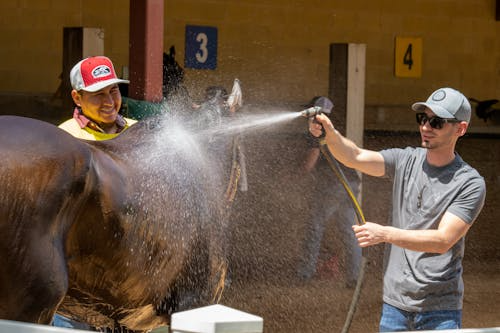
- Use cool water to rinse or hose the horse
- Focus on large muscle groups (neck, shoulders, hindquarters)
- Repeat application until the horse’s temperature drops
- Ensure airflow (fans or breezes) to support evaporation
Horses can lose several gallons of fluid per hour through sweat during intense work, so cooling and rehydration go hand in hand.
A horse that stays hot long after exercise is a red flag, don’t ignore it.
Shade, Airflow, and Turnout Adjustments
Environment plays a huge role in how well a horse handles heat.
At minimum, horses need:
- Access to shade (natural or man-made)
- Consistent airflow
- Relief from direct sun exposure
Stalled horses benefit from fans or well-ventilated barns, while turnout schedules may need to shift to overnight or early morning hours.
Even small changes, like positioning water in shaded areas, can significantly improve comfort and encourage better hydration.
Electrolytes and Sweat Loss
Sweating doesn’t just mean water loss, it also means losing essential electrolytes like sodium and potassium.
Without replenishment, horses may:
- Drink less
- Recover more slowly
- Experience fatigue or performance drops
For horses in regular work or extreme heat, electrolyte supplementation can help maintain balance and encourage drinking. However, it should always be paired with access to plain water. Also, consider if the horse has metabolic issues & choose electrolytes accordingly since many contain a good amount of sugar.
Prevention Over Reaction
The most important mindset shift for hot weather care is this: prevention is far easier than treatment.
Heat-related conditions can escalate quickly, but they are largely avoidable with thoughtful management:
- Monitor hydration daily
- Adjust workload based on conditions
- Provide shade and airflow
- Watch for subtle behavioral changes
A horse rarely goes from perfectly fine to critical without warning, there are almost always signs along the way.
Bringing It Back to THQ
At TurnoutHQ, we know horse care isn’t just about knowledge… it’s about community and shared experience. Managing horses through extreme weather is something every equestrian faces, but no one has to navigate it alone.
From barn hacks to hydration strategies, rider routines to vet-backed advice, THQ is built to connect horse people with the insights that actually make a difference. Because when conditions get tough, having the right information, and the right community, matters more than ever.
Hot weather doesn’t have to derail your riding season. With the right adjustments and awareness, it becomes just another part of responsible horsemanship. And at the end of the day, that’s what great horse care is all about, anticipating your horse’s needs before they ever have to ask.
Sources
https://www.parkcityequinecenter.com/horse-vet-blog/caring-for-your-horse-in-hot-weather
(CAES)