
Gray or Nay? The Melanoma Debate
Should you avoid buying a gray horse because of the health risks?

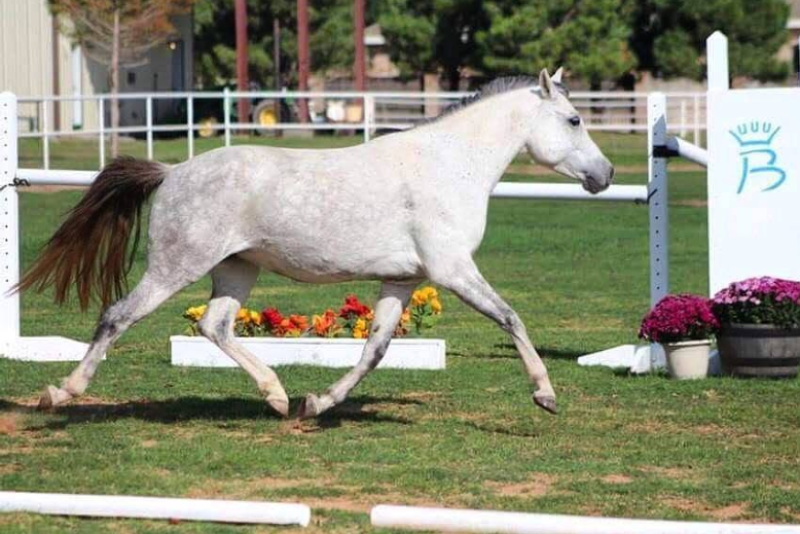
Few horse coat colors inspire as much crowd appreciation as gray. Whether it’s a steel gray youngster, a show horse covered in dapples, or an older horse that has faded to nearly pure white, gray horses have a way of turning heads and standing out. Yet they also seem to inspire an equal amount of division among horsemen. Grays have a reputation that gives many buyers pause, and some more radical online personalities have even gone so far as to say that breeding a gray horse is unethical.
Spend enough time around horse people and you’ll eventually hear someone say they would never own a gray because of the melanoma risk. While it’’s a fact that gray horses are more likely to develop melanomas than horses of other colors, like many things with horses, the conversation isn’t that simple.
Many people often stop at the headline, without looking at or understanding what the gray gene actually does, why it increases melanoma risk, how to assess that risk, and what that actually means for a horse’s long-term health. To know that, you have to look at the science.

Gray Isn’t Really a Color
Despite being classified as a coat color by most breed registries, gray is actually better described as a depigmentation pattern.
A gray horse is born with a normal base color, whether that’s black, bay, chestnut, or any other color determined by its underlying genetics. The gray gene doesn’t replace that color - instead, it gradually removes pigment from the hair over time, regardless of what color lies underneath.
Unlike a dilution gene, which changes the pigment, or a base color gene, which determines the horse’s original coat, gray acts as a modifier. It progressively depigments the hair until many horses eventually appear almost completely white.
It’s important to note that the hair loses pigment, not the horse itself. Gray horses typically retain dark skin and dark eyes throughout their lives, which distinguishes them from true white horses.
The Genetics Behind Gray
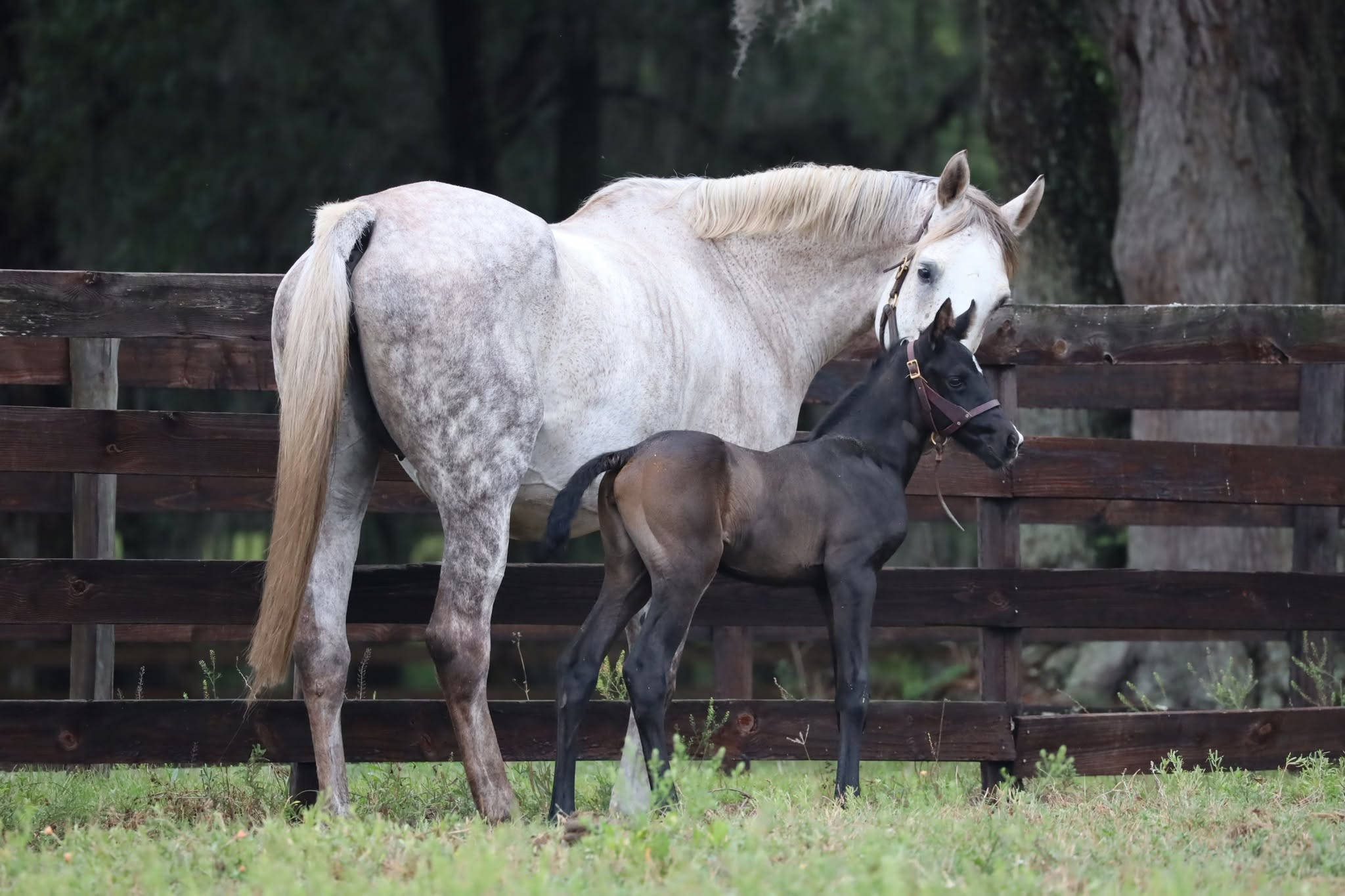
Gray is inherited as an autosomal dominant trait, which means a horse only needs one copy of the gray gene to eventually gray out. The gray gene also cannot “hide” and be passed down unknowingly as a non-expressed recessive trait. For a horse to be gray, it must have at least one gray parent, and a horse cannot be gray unless it had at least one gray parent. A heterozygous gray horse has one copy of the gray gene and has a 50% chance of passing it to each foal. A homozygous gray horse carries two copies and will produce gray offspring every time.
For breeders, genetic testing has become an increasingly valuable tool. Not only can it determine whether a horse is homozygous or heterozygous for gray, but it can also identify foals that carry the gray gene long before the fading process becomes visible.
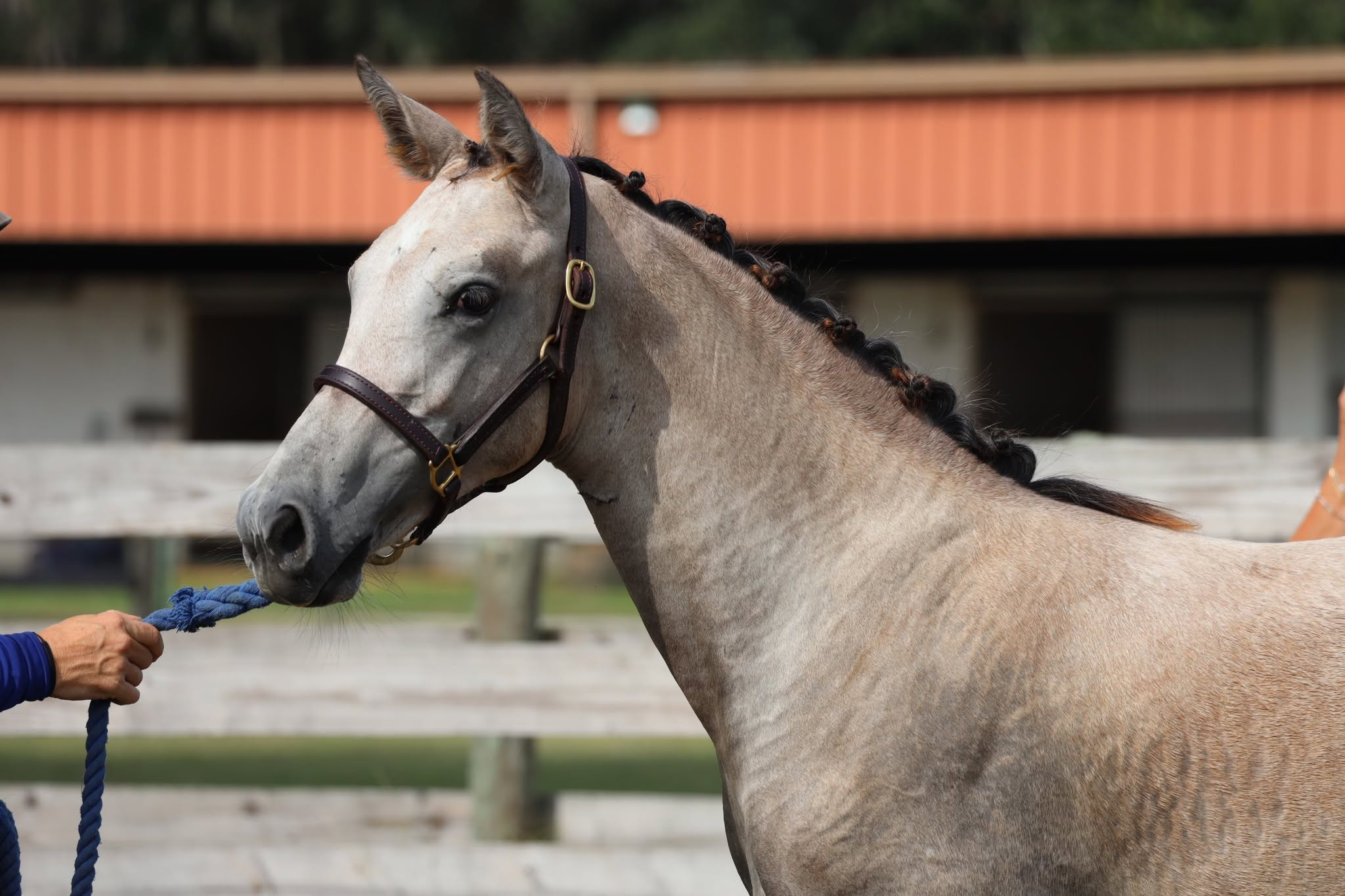
Fast or Slow: Why It MattersThe speed of this depigmentation process can vary tremendously between individuals. Some horses begin showing gray hairs around the eyes, muzzle, or tail at birth, whereas others may not show obvious signs of graying until they are five to seven years old. Along the way, horses may pass through different stages such as dapple gray, steel gray, or fleabitten gray, with most gradually fading to an almost entirely white coat. The speed at which this process occurs is determined by which allele the horse has inherited: G2 or G3.
Horses with the slow-graying allele (known as G2) typically do not show marked graying until adulthood, often maintaining a steel gray or dappled gray appearance until 10 or more years of age.
Horses with the fast-graying allele (known as G3) begin showing signs of gray (such as gray hairs around the eyelids or the base of the tail) in their first week, eventually turning completely white, sometimes even within the first few years of life.
A 2024 study by Dr. Leif Andersson and colleagues at Uppsala University showed that horses with one copy of G3 showed a quicker rate of depigmentation and increased incidence of melanoma, whereas horses with two copies of G3 were the fastest graying and carried the highest incidence of melanoma. Indeed, when it comes to the speed of graying out and potential health risks, not all gray is created equal.
Why Gray Horses Develop Melanomas
The connection between gray horses and melanoma stems from the biology of the gray gene itself. The gray mutation causes overexpression of pigment-producing genes, leading to an excess production of melanocytes, the cells responsible for producing pigment. As these cells continue multiplying, they become more susceptible to uncontrolled growth, resulting in melanoma.
At the same time, the gray gene gradually exhausts the stem cell supply responsible for producing pigment in the hair. As those stem cells are depleted, less pigment reaches the hair shaft, causing the coat to fade over time.
Ironically, the same genetic mechanism that creates that beautiful silver coat is also what contributes to melanoma development.

The Reality of Melanoma Risk
It’s estimated that at least 80% of gray horses over the age of 15 will develop melanomas. On the surface, that can sound like an alarming statistic, but prevalence doesn’t tell the whole story.
It’s important to keep in mind that most equine melanomas are benign. They often grow slowly, remain stable for years, and require little or no treatment beyond monitoring. In fact, melanoma is one of the most common skin tumors found in horses, and they are much more likely to die from colic, lamintis, or catastrophic injury.
However, that doesn’t mean melanomas should be ignored. Malignant melanomas can become invasive, ulcerate, bleed, become infected, or develop internally where they interfere with normal body function. Large tumors may cause discomfort, weight loss, colic, or other complications. These cases can become life-threatening, and the prognosis for invasive melanoma is understandably much more guarded than for benign tumors.
Researchers continue to investigate new treatment options, including melanoma vaccines, but more work is needed to determine how effective these methods may ultimately become.
Does It Really Matter?
For someone selecting breeding stock, gray genetics may absolutely factor into that decision. Today’s genetic testing provides breeders with information that can identify horses that will always produce gray offspring, allow them to distinguish between the different gray variants, and help them make more informed decisions about future generations.
For someone buying a riding horse, however, the presence of the gray gene may or may not be a factor. Yes, gray horses have an increased risk of melanoma, and owners should monitor them carefully.
However, there is also no scientific evidence that gray horses have shorter lifespans than non-gray horses. It's important to note that every horse carries genetic strengths and genetic vulnerabilities. Some, like the gray gene, are highly visible and therefore easily identifiable, whereas most others stay unseen and unknown until they become a serious problem.
Understanding the science behind the gray gene and the effect of the different alleles allows owners to make informed decisions instead of fearful ones, and enables gray owners to be proactive in protecting their horse's health as they age.
Sources
THQ Team