
The History of the World's Largest Single-Breed Horse Show
History of the All American Quarter Horse Congress- the largest single breed horse show in the world.

Every fall, the Ohio Expo Center in Columbus transforms into the epicenter of the American Quarter Horse world. For four weeks in September and October, the All American Quarter Horse Congress draws tens of thousands of horses, exhibitors, and spectators to what is widely recognized as the largest single-breed horse show on the planet.
A Show Born from an Idea About Cattle
The Congress traces its origins to a somewhat unlikely source: a cattle show. At the Ohio Quarter Horse Association's (OQHA) May 1966 board meeting, Blair Folck, owner of National Equine Sales and a past OQHA president, described what he had witnessed at the Charolais Cattle Congress in St. Louis. He was struck by how the sheer scale of that state-sponsored event outshined anything the Quarter Horse industry had produced, and he suggested Ohio could build something similar around Quarter Horses.
The board's reaction was mixed. OQHA had just $3,500 in its treasury, and the association had literally passed the hat the year before to afford a typewriter. A committee spent nearly six months weighing the idea before the board agreed, in January 1967, to move forward on one condition: raise $10,000 by May 1 or scrap the plan entirely. Dr. W.P. "Pete" Drake, who would serve as OQHA president through the first three Congress shows, joined Folck in pitching the concept to potential exhibitors and sponsors, and the fundraising goal was cleared with room to spare.
The first All American Quarter Horse Congress opened November 3-5, 1967, at the Ohio State Fairgrounds, with admission running as little as $5 for a single day. Drake insisted the show operate without favoritism or freebies. Trustees paid their own way in and covered their own travel and lodging, a philosophy meant to avoid the debt troubles that had plagued other new equine events of the era. More than 5,000 people showed up for that inaugural event, and the show turned a $15,000 profit over its three days, proving the concept had legs.
From Fairgrounds Rooms to a Modern Institution
What began as paperwork stacked in spare rooms at Dr. Drake's Richwood, Ohio, home eventually outgrew that space entirely. OQHA rented office space in the village, then hired an executive secretary dedicated to running the show, and in 2017 relocated its headquarters to Columbus, just minutes from the Ohio Expo Center grounds where the Congress is now held.
Nearly six decades later, the event that started as an experiment has become the signature fixture on the American Quarter Horse calendar. Today's Congress spans about four weeks, typically running from late September through late October, and now draws more than 20,000 entries and houses thousands of registered American Quarter Horses on the grounds throughout its run, a scale that dwarfs virtually every other horse show in the country.
What Happens at the Congress
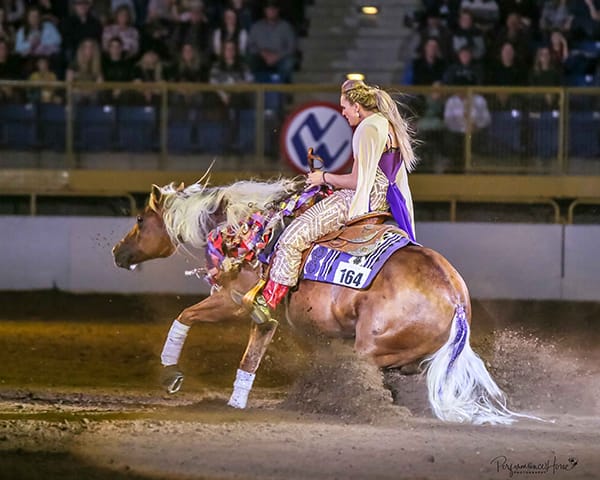
The modern Congress is far more than a single competition; it's a sprawling festival of Western and English disciplines rolled into one. The show's official class list, sanctioned through the American Quarter Horse Association (AQHA), covers an enormous range of events: conformation and halter classes for horses from weanlings to aged stallions and mares; performance events like western pleasure, hunter under saddle, reining, ranch riding, and western riding; timed events including barrel racing, pole bending, and roping; and equitation and showmanship classes for youth, amateur, and select exhibitors. Many classes are further divided by age group and skill level, reflecting the Congress's dual role as both a proving ground for top professionals and an accessible showcase for weekend riders and young competitors.
Beyond the show ring, the Congress has grown into a broader entertainment and commerce hub. Visitors can browse an extensive trade show of commercial exhibitors, attend ticketed special events such as Professional Bull Riding and Freestyle Reining performances, watch the Congress Super Sale, and take in youth contests, a Congress Queen competition, and even a "Puppy Alley" attraction. The event has also become a significant economic driver for Columbus, filling area hotels and drawing visitors from across the country and abroad for its month-long run.
A Lasting Legacy
What Blair Folck once described to a skeptical board as an ambitious gamble has become one of the pillars of the Quarter Horse industry, a show so large it require a full month to complete and so influential that many riders build their entire competitive season around it. From a $10,000 fundraising ultimatum in 1967 to an event now measured in tens of thousands of entries, the All American Quarter Horse Congress stands as a testament to how far a good idea, borrowed from a cattle show, can travel.
Sources
- Ohio Quarter Horse Association, "All American Quarter Horse Congress," https://www.quarterhorsecongress.com/
- American Quarter Horse Association, "All American Quarter Horse Congress," https://www.aqha.com/-/all-american-quarter-horse-congress