
Your Guide to Buying English Riding Boots
Tall boots or paddock boots? Laces or no laces? Stiff or supple? Choosing the right English riding boots can feel like a maze. Don’t worry, we’ve considered the options to help you find the perfect pair for your discipline, budget, and style.

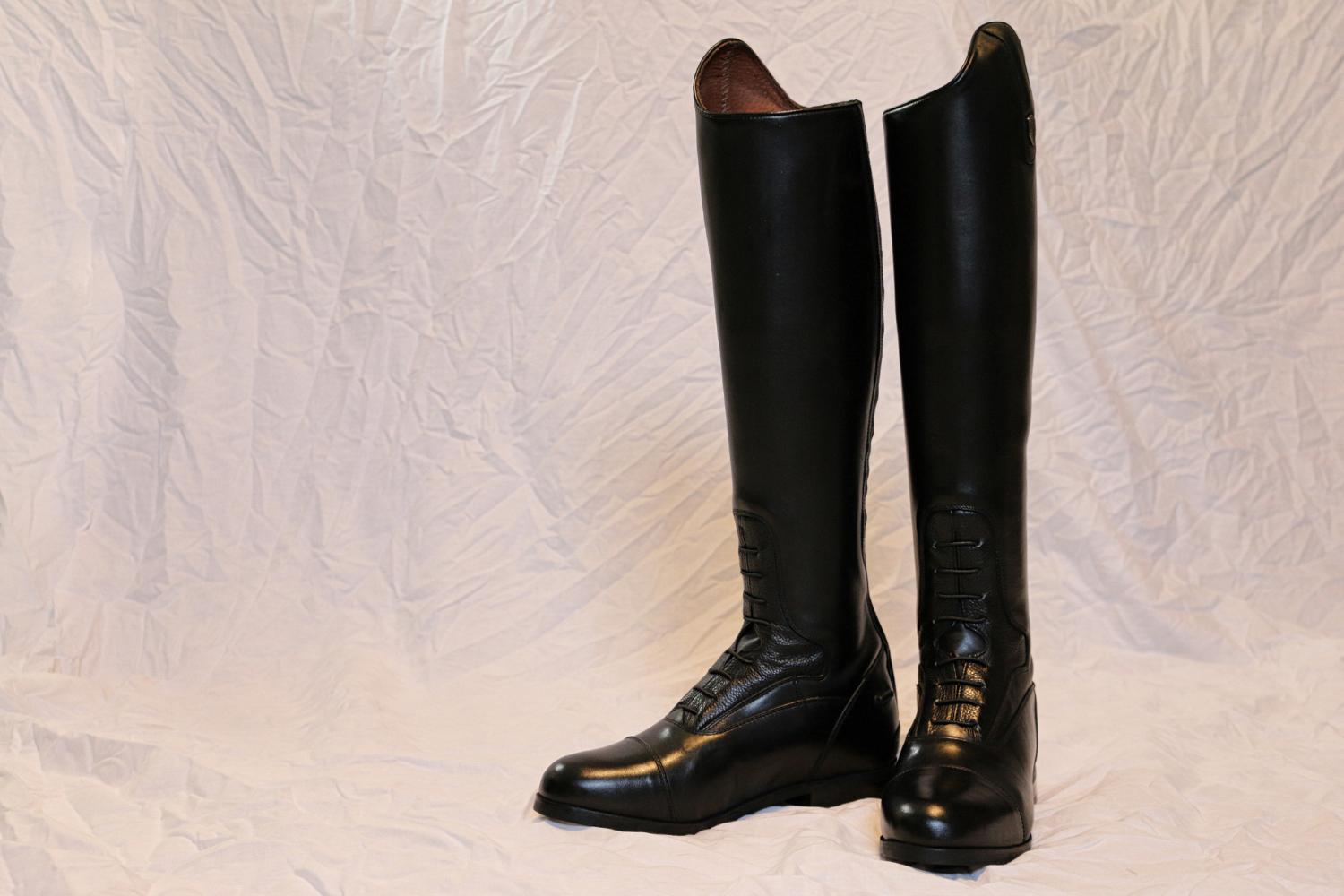
First things first: in English disciplines (hunters, jumpers, dressage, eventing), boots generally fall into two main types: tall boots and paddock boots. Each has its place depending on discipline, show requirements, comfort, and budget.
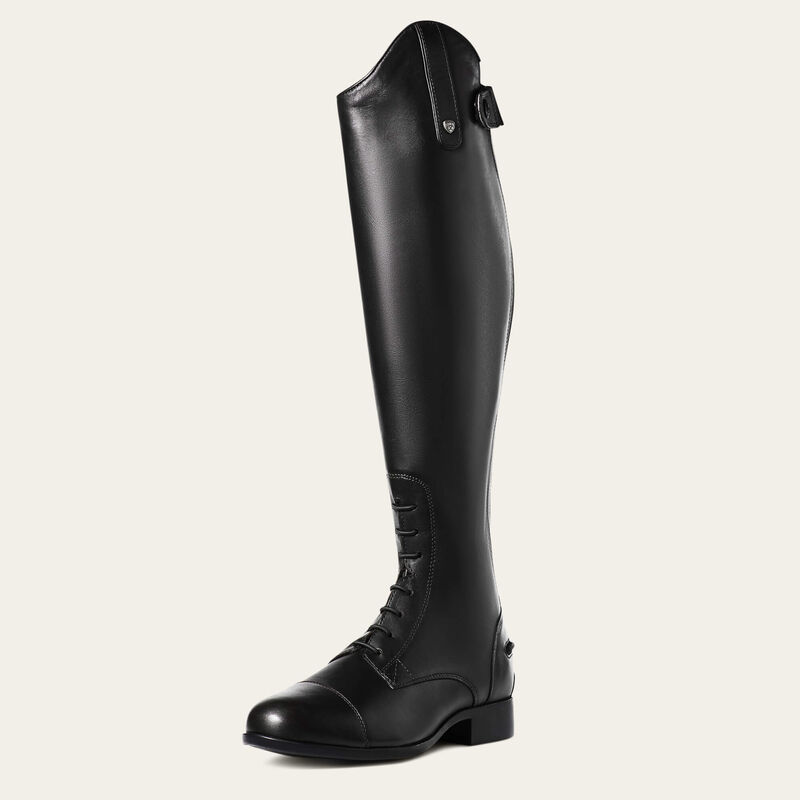
Tall boots
These cover the calf and often extend to just below the knee. Within this category, there are field boots (with laces) and dress boots (without laces) for hunters/jumpers/equitation/eventing, and dressage boots for the dressage rider.
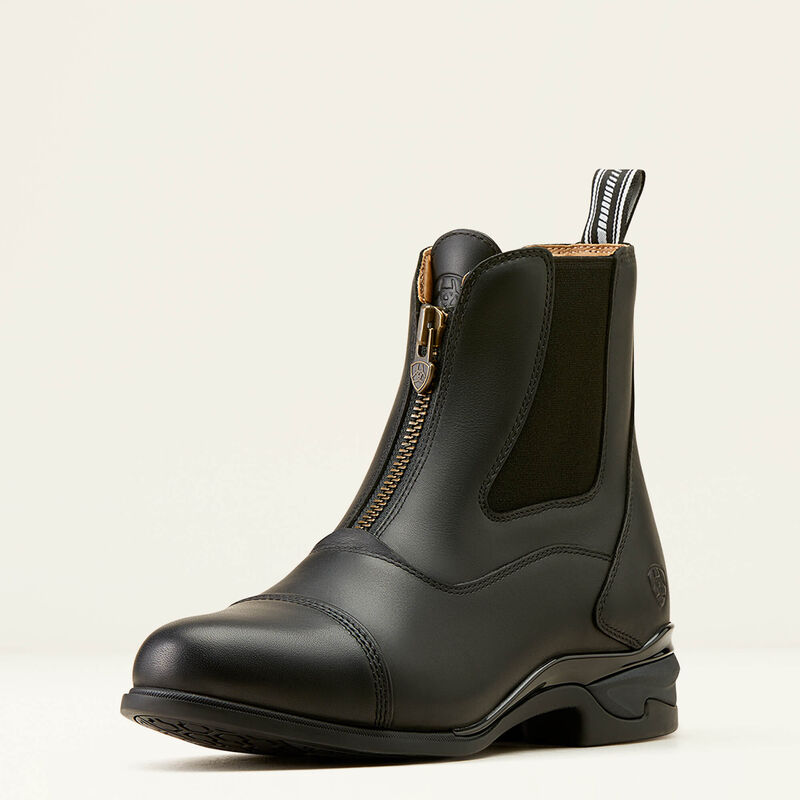
Paddock boots
Ankle-height boots, typically worn for schooling, leisure riding, or by beginners; often paired with half chaps to mimic the tall boot look and feel. They may have laces, a zipper, or be a pull on style.
Choosing between tall boots and paddock boots will depend on your riding goals, your budget, your show schedule (if any), and how much wear you expect them to get.
Match Boot Style to Riding Discipline & Show Needs
Your riding discipline and whether you’ll show will heavily steer your boot choice.
Field boots (a tall boot style)
Ideal for hunters, jumpers, equitation and eventing. These boots typically have lacing at the front of the ankle, which allows more flex and ankle articulation which is helpful for jumping and shorter stirrup lengths.
Dress boots (tall boot style)
Also used in hunters, jumpers, equitation and eventing. These have the tall form but without the laces at the ankle; they offer a sleeker, more polished appearance.
Dressage boots (tall boot style but designed differently)
These are stiffer, designed for flatwork/dressage, where you want a long leg line, minimal ankle flex, and maximum contact with the horse’s side. They are less appropriate for jumping because they restrict the flex required. They are typically dress boots with no laces.
Paddock boots
If you’re not showing or are just schooling, these may be the most practical, cost-effective option. Pairing with half-chaps gives you many of the functional benefits of tall boots, but with easier fit and lower cost. Paddock boots are used with jodphurs for show attire for kids showing in the hunters, jumpers and equitation.
In short: for daily riding, schooling, general comfort, or younger kids in the show ring, paddock boots may suffice. For serious or competitive riding, pick the tall boot style aligned with your discipline.
Fit, Function & Comfort
Beyond just style, the boot’s fit, materials, and functionality matter. These will determine how the boot supports your leg, comfort, stability in the stirrup, and durability.
Custom vs. Off the Rack
Most companies offer custom or semi-custom boots for a perfect fit. Custom boots also allow for fancy designs like punched toes, patent leather or animal print trims, bling and more. Leather type, spur rests and zippers may also have more options with custom boots. Off the rack options however have gotten very popular in recent years due to the large variety of sizes available including different heights and calf widths. Many people are now able to find a custom fit with an off the rack boot.
Heel height
All English riding boots should have a heel of approximately 1 inch high. This small heel prevents the rider’s foot sliding through the stirrup iron.
Leather quality & construction
For tall boots, softer supple leather (especially in field or dress boots) allows the ankle to crease slightly and for proper movement and flex while still giving support. In contrast, dressage boots use stiffer leather or built-in stiffeners to hold the leg.
Ankle flexibility vs stiffness
If you’re jumping or need to use shorter stirrups, you’ll want flexibility around the ankle (hence field boots with laces). If you’re doing primarily flatwork or dressage, a stiffer ankle may be preferred.
Calf fit & topline
Tall boots are often cut to the rider’s calf, with a contoured ankle and calf area that help the leg sit nicely against the saddle and horse. Some feature a “Spanish topline” (an upward curve at the outer top of the boot) for style and fit.
Ease of entry/zipper vs pull-on
Most contemporary tall boots use full-length zippers at the back (or sometimes the side) for ease of putting on and taking off. Pull-on styles remain but are less common in readily available stock.
Break-in and comfort
Especially for tall boots, expect a break-in period. They may feel stiff initially, but over time should mold to your leg for comfort and support. There are many tips and tricks for breaking in new boots including spraying with alcohol, soaking the boots in warm water and getting them professionally stretched if needed.
Budget, Use-Case & Long-Term Value
Choosing boots isn’t just about the purchase moment it’s about how long they’ll serve you, how often you’ll use them, and how they match your budget.
If you’re just starting out or riding casually, a good pair of paddock boots might make the most sense and they’re easier to fit, less expensive, and paired with breeches and half chaps they give you a tall boot feel.
If you’re serious about showing, especially in tall boot disciplines, you may invest in a high-quality tall boot that gives you both the performance features and the show-ring appearance.
Think about long-term value: a well-made tall boot can last many years if cared for properly. The correct fit now will pay dividends in durability, comfort, and performance.
Always check with your coach or trainer if you compete, since certain show organizations or disciplines may have preferences (or even rules) around boot style, color, materials, or accessories.
Practical Tips Before You Buy
Measure correctly
For tall boots, knowing your calf circumference and height (from floor to back of knee) can help you select the right size. Many brands offer calf-width & different height options. It may be more accurate to get measured by a professional at a tack shop if possible.
Try them on with your breeches
Boots will feel different with breeches, so be sure to wear them when trying boots, ideally after a ride when your feet may be slightly warmed or expanded. Also be sure to use appropriate tall boot socks.
Check heel position and stirrup interaction
When mounted (or at least in stirrups), make sure your foot stays in an optimal position and the boot heel is appropriate in the iron.
Flex test
Walk around in them, flex your ankle, and see if the boot gives the right amount of support and flex. If the boot is too rigid for your discipline (e.g., jumping) it may impede you.
Check zipper, stitching, sole quality
These details often separate a long-lasting boot from a short-lived one.
Consult your coach/trainer
Especially if you’re showing, ask for brand preferences or specific features they recommend.
Plan for break-in time
If you buy tall boots, plan several casual rides to break them in before any big show or important ride.
Conclusion
Selecting the right English riding boot means balancing discipline needs, show requirements, comfort, budget and long-term use. If you ride hunters, jumpers or equitation, field or dress boots are both appropriate. If you’re riding dressage, you’ll want a more formal and stiffer design. If you’re schooling or riding recreationally, paddock boots paired with half chaps may suffice.
Remember: it’s about how your boots support your leg position, your comfort during the ride, and your ability to perform. Put in the time to measure, try on, ask questions, and you’ll end up with boots that can carry you confidently in the saddle for many rides to come.
At TurnoutHQ, we believe the right gear should support every rider’s confidence and performance, just like the perfect pair of boots. Whether you’re schooling at home, heading to a show, or exploring new disciplines, THQ connects you with the resources, community, and brands that help you ride your best. Join us and step into a better ride, every time!