
The FEI Jog Explained: What It Is, Why It Matters, and How to Nail It
Think the FEI jog is just a quick trot and a wave? Think again. This pre-show ritual might look simple, but it plays a major role in protecting horse welfare and setting the tone for competition. Here’s what to expect, what officials look for, and how to jog in with confidence.

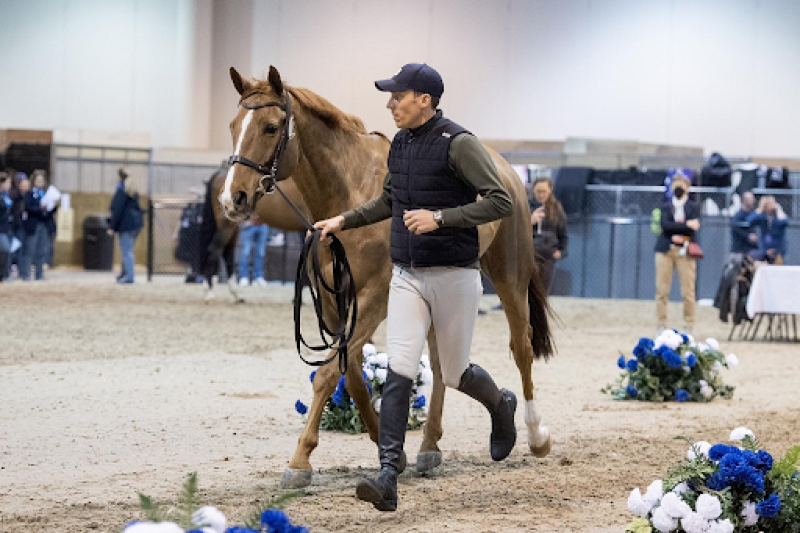
If you’re stepping into the world of FEI (Fédération Equestre Internationale) competitions as a competitor or a spectator, there’s one moment that makes even seasoned riders take a deep breath before stepping forward. The FEI jog, also known as the horse inspection or trot-up.
It might look simple on the surface. Walk in, trot your horse, smile politely. But the jog plays a critical role in international competition and understanding the details can make the experience far less intimidating.
Let’s break down exactly what the FEI jog is, what officials are looking for, and how to set yourself and your horse up for success.
What Is the FEI Jog?
The FEI jog is a mandatory horse inspection required at FEI-sanctioned competitions before a horse is allowed to compete. According to the USEF Rulebook, horses must be inspected and accepted by the Ground Jury and Veterinary Delegate to confirm they are fit to compete and free from obvious clinical abnormalities.
This applies across disciplines including dressage, eventing, show jumping, and driving. No matter how experienced your horse is, every FEI horse must jog.
Why the Jog Exists
At its heart, the jog is about horse welfare.
The USEF Rulebook makes it clear that the purpose of the horse inspection is to protect the health and safety of the horse by ensuring it is sound and capable of performing the required work without undue risk. It also ensures a fair playing field. Every horse is evaluated under the same standard on the same surface, before competition begins.
What Happens During the FEI Jog
While formats can vary slightly by venue, most FEI jogs follow the same structure.
Identification and Presentation
Horses arrive at their scheduled time, typically wearing a bridle and competition number. FEI passport and identification requirements are enforced as part of the inspection process under USEF-adopted FEI regulations.
Standing Inspection
Your horse is asked to stand quietly in front of the Ground Jury and Veterinary Delegate. They observe general condition, posture, and demeanor.
The Trot-Up
You will jog your horse in a straight line away from the officials, turn, and jog back toward them. The USEF Rulebook specifies that horses must be shown at the trot in hand on a firm, level surface so movement can be clearly evaluated.
Officials are watching for rhythm, straightness, symmetry, and freedom of movement.
Evaluation and Decision
After the trot-up, officials will decide whether the horse is:
- Accepted to compete
- Sent to a holding area for further examination
- Not accepted and withdrawn from competition
The Ground Jury has final authority, advised by the Veterinary Delegate, as outlined in the USEF Rulebook and FEI Veterinary Regulations.
What Officials Are Looking For
The jog is not a detailed veterinary exam, but it is a visual soundness assessment. The USEF Rulebook emphasizes that horses must be fit to compete and show no signs of lameness or injury that could compromise welfare or performance.
Officials assess:
- Evenness of stride
- Consistency of rhythm
- Straightness on both passes
- Willing, controlled movement
They may also listen to footfalls and observe how the horse tracks up on the surface provided.
Possible Outcomes and What They Mean
Accepted
Your horse is cleared to compete. Take a breath and head back to the barn with a pat and a peppermint.
Held for Re-Inspection
If something looks questionable, officials may request additional observation in a holding area. This does not automatically mean elimination. Many horses are accepted after further evaluation.
Not Accepted
If a horse is deemed unfit to compete, it will be withdrawn. While disappointing, this decision is made in the interest of the horse’s well-being, as required under USEF and FEI welfare standards.
Presentation Matters More Than You Think
While soundness is the priority, presentation helps officials clearly evaluate your horse.
The USEF Rulebook requires horses to be presented in a safe and appropriate manner. In practice, that means:
- A clean, well-groomed horse
- Properly fitted bridle
- Handler dressed neatly with secure footwear
- Calm, controlled handling throughout the inspection
Practicing jogging your horse in hand at home can make a world of difference. A relaxed, confident presentation allows officials to focus on movement rather than behavior.

Common Misunderstandings About the FEI Jog
“The jog is a full vet exam.”It is not. The USEF Rulebook clarifies that horse inspections are limited to assessing fitness to compete and do not replace a comprehensive veterinary evaluation.
“Only lame horses get held.”Not true. Minor irregularities, stiffness, or even footing concerns can prompt a second look.
“Experienced horses never fail the jog.”Every horse is evaluated fresh at each competition, regardless of reputation or résumé.
Final Thoughts
The FEI jog can feel intimidating, but at its core it is a safeguard for the horses we love. Knowing what to expect, understanding the rules, and preparing thoughtfully can turn the jog into a calm, professional experience rather than a stress fest.
Take a deep breath, jog straight, and trust your preparation. You and your horse have got this.
For more horse show related discussions and tips, check out the community on TurnoutHQ!
Sources
- USEF Rulebook, General Rules GR414 and FEI Veterinary Regulations as adopted by USEF
- U.S. Dressage Federation, Beginner’s Guide to Jogging
- FEI Veterinary Regulations, Federation Equestre Internationale