
The Dry Lot Advantage: Creating a Safe, Healthy Space for Your Horse
When green pastures aren’t the best option for your horse, a dry lot can be the perfect solution. These grass-free spaces give horses room to move and socialize while helping manage weight, laminitis, and metabolic health. Here’s how to build one that keeps your horse safe and happy.

When you picture a happy horse, you might imagine a gleaming coat, a gentle breeze, and a lush green pasture. But for many horses, that grassy paradise can lead to serious health challenges. Horses prone to laminitis, insulin resistance, or weight gain often need a more controlled environment. That’s where the dry lot comes in.
A dry lot is a turnout area with little or no grass. It offers the freedom to move and socialize without the risk of overgrazing or metabolic flare-ups. While it may not look as picturesque as a grassy field, a well-designed dry lot can be one of the best tools for managing your horse’s health year-round.
Why Some Horses Need a Dry Lot
Pasture access sounds ideal, but too much grass can spell trouble. Horses evolved to graze on sparse vegetation while covering miles each day. Modern pastures are often far richer than what their digestive systems are built to handle. For horses with metabolic sensitivities, those lush green blades can trigger painful bouts of laminitis or cause unhealthy weight gain.
A dry lot provides the best of both worlds. Your horse gets fresh air, movement, and social interaction, but you stay in control of what and how much they eat. It also gives pastures time to rest and regrow, helping preserve your land for the long term.
Choosing the Right Spot
The location of your dry lot plays a big role in how well it works. Ideally, pick an area that’s close to the barn so feeding and watering are convenient. The ground should drain well, since standing water leads to mud, bacteria, and hoof problems. Avoid low spots that stay soggy after rain.
It also helps if your dry lot sits near your main pasture or riding area, so your horse can still see the rest of the herd. Horses are social animals, and maintaining that visual contact reduces stress and anxiety.
Building the Fence
Strong, safe fencing is essential. Horses may test the boundaries of a smaller turnout, especially when they see lush grass just beyond the rails. Choose fencing materials that are sturdy, visible, and built to last. Wood, vinyl, or woven wire can all work well, and adding a single electric strand along the top can discourage leaning or chewing.
Make sure gates open wide enough for a wheelbarrow or small tractor, since you’ll need access for cleaning and footing maintenance. Also make sure they open both directions for safety purposes. Keep the area clear of sharp edges or loose wires that could cause injury.
Laying the Groundwork
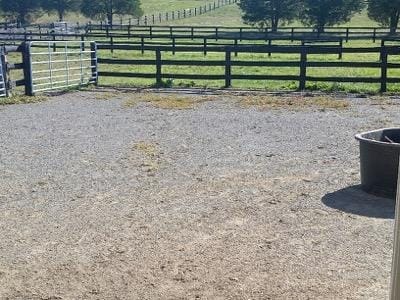
Footing is what keeps a dry lot functional in every season. Start by scraping away topsoil and leveling the surface. A compacted base of crushed stone or gravel helps water drain, while a layer of sand or screenings on top provides cushion and comfort. It may depend on what is available in your area. Talk to your contractor or reach out to a local quarry.
The goal is a firm, mud-free surface that’s gentle on hooves. Regular dragging or raking keeps it even and prevents ruts. Some owners add mats or rubber pavers in high-traffic spots like gates or feeding areas to minimize wear. Landscape fabric or similar products are often used in these areas as well.
Shelter and Shade
Even in a dry lot, horses need protection from the elements. A simple run-in shed gives shade in summer and a windbreak in winter. Make sure it’s positioned to face away from prevailing winds and large enough for all horses sharing the space. If your dry lot doesn’t have natural shade, consider adding a shade cloth or lightweight structure to help your horse stay comfortable during hot months.
Feeding on a Dry Lot
Without grass to graze, hay becomes your horse’s main forage source. Offer hay in a slow feeder or hay net to mimic natural grazing behavior and keep your horse busy throughout the day. This also prevents horses from eating off the ground, which can increase their risk of sand colic. Choose a grass hay that’s low in sugar and starch, especially for easy keepers or horses with metabolic issues.
Provide clean water at all times and keep salt available, either loose or in a block. Since horses on dry lots may not get the variety of nutrients they’d find in pasture, talk to your vet or equine nutritionist about a vitamin or mineral supplement to balance their diet.
Keeping Things Clean
Good management is what keeps a dry lot healthy. Regularly remove manure to control flies and odor, and check drainage after rainstorms to make sure water isn’t pooling. If you use bedding in the shelter, replace it often to prevent mold or ammonia buildup.
Even though the space is smaller than a pasture, maintenance makes a big difference in how your horse enjoys it. A well-kept dry lot feels more like a comfortable turnout than a confinement area.
Keeping Horses Active and Happy
Movement and enrichment are just as important as feed management. Without grass to nibble, horses may get bored. Try placing multiple slow feeders around the lot so your horse walks between them. Small obstacles or logs can also encourage natural movement.
If you have time, add daily groundwork, liberty play, or short riding sessions to help your horse burn energy and stay mentally engaged. A happy horse is a healthier horse, and dry lots work best when combined with consistent interaction and exercise.
Overcoming the Guilt
It’s normal to feel a little guilty about limiting your horse’s access to pasture. We often equate “more grass” with “better life,” but in reality, many horses thrive with less. The key is providing variety, movement, and companionship.
Once you see your horse’s improved condition and steadier energy, that guilt quickly fades. Horses in well-managed dry lots often have shinier coats, stronger hooves, and better overall health than they did before.
A Thoughtful Approach
Creating a dry lot isn’t about restricting your horse’s freedom, it’s about providing a safer, more balanced environment. For horses who can’t handle unrestricted grazing, it’s a way to keep them healthy without isolating them from outdoor life.
It takes planning and care, but the rewards are worth it. You’ll have a cleaner, safer turnout area, less stress about weight management, and a happier, healthier horse.
If your horse struggles with metabolic issues, or your pastures are overgrazed, now might be the perfect time to explore the dry lot approach.
At TurnoutHQ, we love seeing how horse owners adapt their spaces to meet their horses’ unique needs. Share your own dry lot setup, tips, or before-and-after photos with the THQ community. You might inspire another horse owner!
Source
https://www.horseillustrated.com/horse-health-the-dry-lot-diary/